
ABOUT ME

Welcome
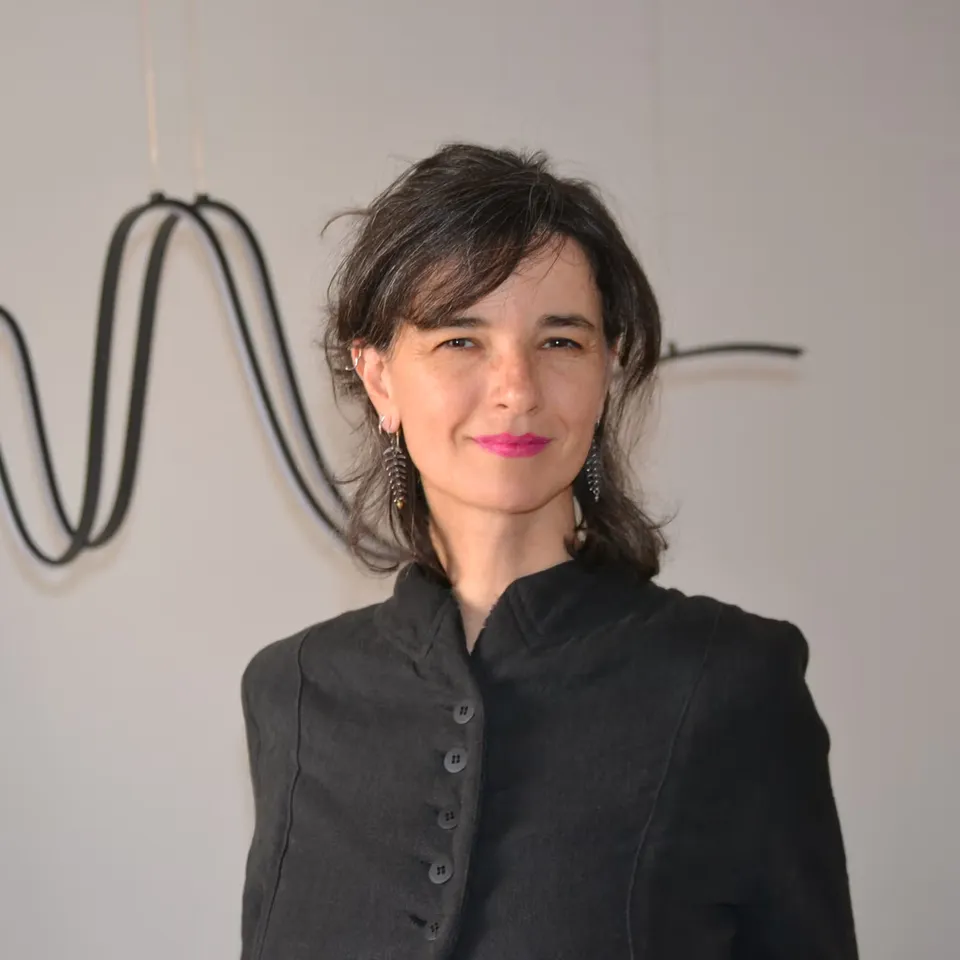
I could bore you with an endless résumé (which you can read here) or tell you the classic story of “how I always wanted to be a psychologist.” But what truly matters is that, from the very start, you feel this space is designed for you — to offer real solutions and help you move forward.
I’ve been practicing as a psychologist since 2004, with one guiding idea in mind: to be more effective.
Curious by nature, my ongoing pursuit to improve my work led me to the model of Brief Therapy. I teach it as the Three Rs Model because it is grounded in the Resources people already possess, the Responsibility each person holds to create change, and the Respect for who you are, your context, and your own pace.
From San Francisco to Barcelona

After 12 years in the United States, I not only grew as a professional but also built my family there, with two young American children. Multiculturalism, international mobility, and their impact on family relationships are subjects I know well — not only from a professional perspective but also through my own life experience.
I continue to train and update my skills so that every session, consultation, and class is precise, effective, and focused on real results.
I especially enjoy teaching and working across cultures. I collaborate with various national and international organizations and associations to exchange knowledge and apply it for the benefit of my clients.
About the Brief Therapy Model
“A journey of a thousand miles begins with a single step” – Lao Tzu
When seeking change, that first step is decisive.
The Brief Therapy Problem-Solving Model was developed in the 1960s at the Mental Research Institute (MRI) in Palo Alto, California — an international reference in systemic thinking.
Its founders, Paul Watzlawick, Richard Fisch, and John Weakland, created the Brief Therapy Center with a clear purpose: to find effective ways to relieve human suffering in a shorter period of time.
Unlike traditional therapy, which often focuses on the past and extends the process, Brief Therapy centers on the present and on change. Therapist and client work together to identify the actions that maintain the problem and to break the cycle that sustains it.
That first strategic shift often triggers others, creating a snowball effect that gradually weakens the problem until it dissolves.
The model is also inspired by the therapeutic strategy of Milton Erickson, incorporating hypnosis, suggestion, and indirect communication to promote change in a subtle yet powerful way — always respecting each person’s or system’s own rhythm and resources.
This approach is versatile and practical, applicable to all kinds of challenges — especially when it feels like you’ve already tried everything. It can be used in any human system: in companies, schools, or in everyday situations where people simply need to understand each other better — like a doctor with their patients, or a banker with their clients.

Publications
- La Terapia Breve del MRI y sus Hipno-estrategias -Revista Hipnológica Número 17, año 15· Jul 1, 2025
- Explorando la huella de Milton Erickson en la Terapia Breve: Mi experiencia en el MRI - Revista Hipnológica Número 16, año 15 · Dec 22, 2024
- Díaz G. (2021). Si supieras que le estás dando veneno a tu hija, ¿qué harías? En K. Schlanger (ed.). Sobrevivir a la crianza de los hijos. Práctica para pasarla bien juntos. (pp.111-120). Barcelona: Herder
- Schlanger K., Viorreta, R.T., Arnal D. G. and Sánchez A. P., (2021). “My Child is Anxious Because We Might Get Deported”: Brief Therapy from MRI with an Immigrant Family in the United States. Australian & New Zealand Journal of Family Therapy, Vol. 41(4), p.355-366
- Schlanger K., Sánchez A. P., Arnal D. G. and Viorreta, R.T. (2019). MRI/Problem-Solving Brief Therapy: The Evolution of the Model as Illustrated in the Case of an Adolescent Girl That Proves Difficult for the Therapist. Journal of Systemic Therapies, Vol. 38(2), page 47-63.
- Serrat L. Aiguabella, A., Díaz G. and Schlanger K. (2018). Terapia breve y trauma complejo a través de un caso clínico en el Centro de Terapia Breve del Mental Research Institute. Apuntes de Psicología, Vol. 36, nº3, page 173- 180.
- Aiguabella, A., Serrat L., Díaz G. and Schlanger K. (2018). Problem Solving Brief Therapy/MRI style and Cognitive-Behavioral therapy. A brief comparison of models: a clinical case comparing two different therapeutic approaches. Revista de Psicoterapia, Vol.29, nº110, page 273-286.
- Schlanger, K., Cinella, M., Díaz, G. & González, P. (2014). Hoy en Palo Alto: un trabajo en las escuelas californianas con población inmigrante. En R. Medina, E. Laso & E. Hernández. Pensamiento sistémico: nuevas perspectivas y contextos de intervención. (pp. 73-95). México: Litteris.
Your first session starts with a message
If you’d like more information, want to book a first appointment, or simply have a question, feel free to reach out. You can contact me through the form, by email, or by scheduling a call. I work online and offer in-person sessions in Barcelona, and I will personally respond to help you take the first step.
Contact me